
The Technology Revolution Reshaping Our World
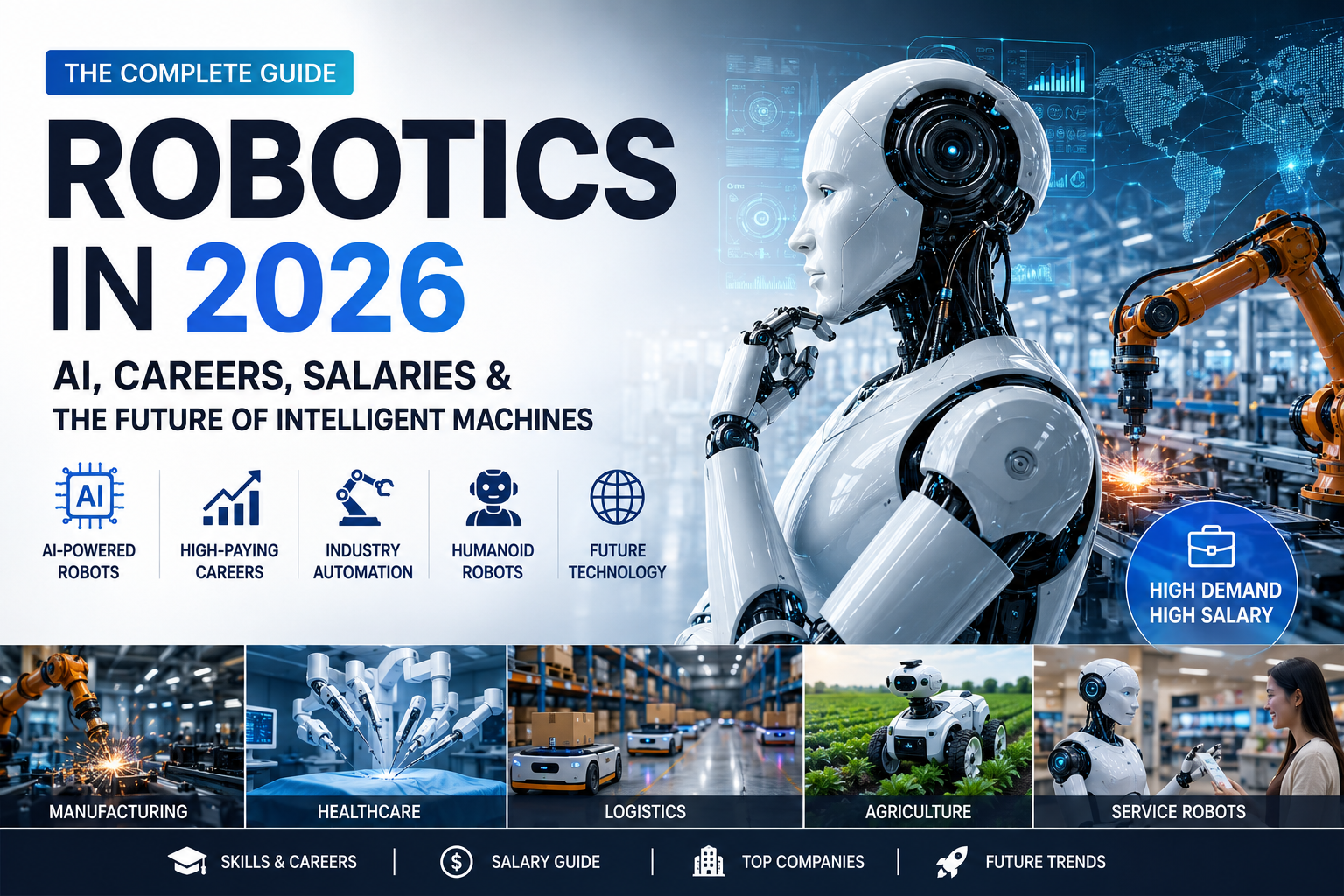
Robotics is no longer a futuristic concept confined to science-fiction movies. Today, robots assemble vehicles, assist surgeons during life-saving operations, automate warehouses, help farmers increase crop yields, and are even beginning to enter homes as personal assistants. As artificial intelligence continues advancing at an unprecedented pace, robotics has become one of the most exciting and transformative technologies of our time.
In 2026, robotics sits at the center of global innovation. Governments are investing billions into automation. Technology giants are racing to develop humanoid robots. Businesses are adopting robotic systems to increase productivity and reduce costs. Meanwhile, students and professionals are increasingly exploring robotics engineering careers because of the industry’s strong growth potential and high salaries.
The rapid rise of robotics raises important questions. What exactly is robotics? How does artificial intelligence make robots smarter? Which companies are leading the robotics revolution? Can robotics become one of the highest-paying engineering careers? Most importantly, how will robots change the future of work and everyday life?
This comprehensive guide answers these questions while providing a deep dive into robotics technology, industry trends, salaries, career opportunities, and future innovations that are shaping the next decade.
What Is Robotics and Why Does It Matter?
Robotics is the branch of engineering and computer science focused on designing, building, operating, and programming robots. A robot is a machine capable of performing tasks automatically or semi-autonomously, often with greater precision, consistency, and efficiency than humans.
Modern robotics combines multiple disciplines, including:
- Mechanical engineering
- Electrical engineering
- Computer science
- Artificial intelligence
- Machine learning
- Computer vision
- Sensor technology
Simply put, robotics is the science of creating intelligent machines that can perform physical tasks.The importance of robotics has grown significantly because industries face increasing pressure to improve efficiency, reduce labor shortages, enhance workplace safety, and remain competitive in a rapidly evolving global economy.
For example, automotive manufacturers rely heavily on robotic arms to assemble vehicles with incredible precision. Hospitals use robotic surgery systems that allow surgeons to perform complex procedures with greater accuracy. Logistics companies deploy warehouse robots that can sort and transport thousands of products every hour.What makes robotics particularly exciting today is the integration of artificial intelligence. Traditional robots could only follow pre-programmed instructions. Modern AI-powered robots can learn, adapt, recognize patterns, understand environments, and make decisions based on real-time data.
As industries continue embracing automation, robotics is becoming one of the most valuable technological fields in the world.
How AI Is Transforming Robotics
One of the most searched questions online is: “What is AI in robotics?”Artificial Intelligence enables robots to perform tasks that require reasoning, learning, perception, and decision-making. Without AI, robots follow fixed instructions. With AI, robots become adaptive systems capable of handling dynamic environments.
AI empowers robots through:
Computer Vision
Computer vision allows robots to see and interpret images, objects, and surroundings. This technology helps robots identify products in warehouses, recognize faces, inspect manufacturing defects, and navigate complex environments.
Machine Learning
Machine learning enables robots to improve performance through experience. Instead of relying solely on programming, robots learn patterns from data and continuously optimize their actions.
Natural Language Processing
Advanced robots can understand spoken commands and communicate naturally with humans. This capability is becoming increasingly important in customer service, healthcare, and personal assistance applications.
Autonomous Navigation
AI-powered robots can create maps, avoid obstacles, and determine optimal routes without human intervention. Autonomous delivery robots and warehouse robots heavily rely on this technology.
The combination of robotics and artificial intelligence is creating machines capable of performing tasks once considered uniquely human. This fusion is expected to drive the next wave of technological disruption across nearly every industry.
Types of Robots Transforming Industries
The robotics industry encompasses a wide variety of robotic systems designed for specific applications.
Industrial Robots
Industrial robots dominate manufacturing environments. They perform repetitive tasks such as welding, painting, assembly, packaging, and quality inspection.
Benefits include:
- High accuracy
- Continuous operation
- Increased productivity
- Reduced manufacturing costs
Medical Robots
Healthcare robotics continues to expand rapidly. Surgical robots assist doctors during complex procedures, while rehabilitation robots support patient recovery.
Benefits include:
- Greater precision
- Reduced recovery times
- Enhanced patient outcomes
Service Robots
Service robots operate outside traditional manufacturing settings.
Examples include:
- Hotel robots
- Cleaning robots
- Delivery robots
- Customer service robots
Agricultural Robots
Agricultural robotics is helping address labor shortages while improving farming efficiency.
Applications include:
- Automated harvesting
- Crop monitoring
- Precision spraying
- Soil analysis
Humanoid Robots
Humanoid robots are designed to resemble and interact like humans. Companies are investing heavily in developing robots capable of working alongside people in factories, warehouses, offices, and homes.
Humanoid robotics is expected to become one of the most disruptive technological sectors of the next decade.
Top Robotics Companies Leading Innovation in 2026
The global robotics industry is experiencing unprecedented growth, fueled by advances in artificial intelligence, machine learning, computer vision, and industrial automation. As businesses across manufacturing, healthcare, logistics, agriculture, and retail increasingly adopt robotic solutions, a handful of companies have emerged as global leaders in innovation.
These robotics companies are not only developing advanced robotic systems but are also shaping the future of automation, smart factories, autonomous machines, and humanoid robots. If you’re researching the best robotics companies, top automation firms, or the future leaders of AI-powered robotics, these organizations deserve close attention.
1. ABB Robotics
Website: www.abb.com
ABB is one of the world’s largest industrial robotics and automation companies. Headquartered in Switzerland, ABB provides robotic solutions for manufacturing, automotive production, logistics, electronics, food processing, and healthcare industries.
Key Innovations:
- AI-powered industrial robots
- Smart factory automation
- Collaborative robots (Cobots)
- Machine vision systems
- Digital manufacturing solutions
ABB operates in over 100 countries and continues to lead Industry 4.0 transformation through intelligent automation technologies.
2. FANUC Corporation
Website: www.fanuc.com
FANUC is a Japanese robotics giant and one of the most recognized names in industrial automation. The company has installed millions of robots worldwide and is particularly dominant in automotive manufacturing.
Key Innovations:
- Industrial robotic arms
- CNC automation systems
- Factory automation solutions
- Predictive maintenance technology
- AI-enhanced manufacturing robots
FANUC robots are widely used by global automotive brands and electronics manufacturers due to their reliability, precision, and long operational lifespan.
3. KUKA Robotics
Website: www.kuka.com
Germany-based KUKA is known for advanced industrial robots, smart factories, and intelligent manufacturing systems. KUKA robots are commonly found in automotive assembly plants and modern production facilities around the world.
Key Innovations:
- Industrial robotic systems
- Smart manufacturing platforms
- Autonomous mobile robots
- Digital factory integration
- Human-robot collaboration
KUKA continues investing heavily in AI-driven automation technologies that improve productivity while reducing operational costs.
4. Yaskawa Electric Corporation
Website: www.yaskawa.com
Yaskawa is one of the pioneers of industrial robotics and motion control systems. Its Motoman robots are used extensively across manufacturing, packaging, welding, and material handling industries.
Key Innovations:
- Motoman industrial robots
- Motion-control technology
- Factory automation systems
- Welding robots
- Material handling automation
Yaskawa remains one of the “Big Four” robotics manufacturers globally and plays a crucial role in industrial automation.
5. Boston Dynamics
Website: www.bostondynamics.com
Boston Dynamics is famous for creating some of the world’s most advanced mobile robots. Its robots demonstrate remarkable agility, balance, mobility, and environmental awareness.
Popular Robots:
- Atlas humanoid robot
- Spot robotic dog
- Stretch warehouse robot
Key Innovations:
- Dynamic locomotion
- Autonomous navigation
- Warehouse automation
- AI-powered mobility systems
Boston Dynamics continues pushing the boundaries of what robots can achieve in real-world environments.
6. Tesla Robotics
Website: www.tesla.com
Tesla has rapidly become one of the most talked-about robotics companies through the development of its humanoid robot, Optimus.
The company’s long-term vision involves deploying intelligent robots capable of performing repetitive, dangerous, and labor-intensive tasks in factories, warehouses, and eventually homes.
Key Innovations:
- Tesla Optimus humanoid robot
- AI-powered vision systems
- Autonomous robotics platforms
- Advanced neural network training
Many analysts believe Tesla could become a major force in the humanoid robotics market over the next decade.
7. NVIDIA Robotics
Website: www.nvidia.com
While NVIDIA is best known for graphics processing units (GPUs), it has become one of the most influential companies in AI-powered robotics.
Its robotics ecosystem provides the computing infrastructure needed to train, simulate, and deploy intelligent robots.
Key Technologies:
- NVIDIA Isaac Platform
- AI robotics simulation
- Machine learning frameworks
- Computer vision systems
- Autonomous robotics development tools
Many robotics startups and enterprise robotics companies rely on NVIDIA’s AI technology to power next-generation machines.
8. Figure AI
Website: www.figure.ai
Figure AI has emerged as one of the fastest-growing humanoid robotics startups in the world. The company focuses on developing general-purpose humanoid robots capable of working alongside humans in commercial environments.
Key Innovations:
- Figure humanoid robots
- Workplace automation
- AI-driven task execution
- Human-like mobility systems
The company’s ambitious vision has attracted significant investment and attention from the technology sector.
9. Agility Robotics
Website: www.agilityrobotics.com
Agility Robotics specializes in humanoid robots designed for logistics, warehouse operations, and material handling.
Its flagship robot, Digit, is among the most commercially advanced humanoid robots currently available.
Key Innovations:
- Digit humanoid robot
- Warehouse automation
- Logistics robotics
- Autonomous mobility systems
Agility Robotics is helping bridge the gap between research robots and practical workplace deployment.
10. Intuitive Surgical
Website: www.intuitive.com
Intuitive Surgical dominates the medical robotics sector through its da Vinci Surgical System, one of the most successful robotic surgery platforms ever developed.
Key Innovations:
- Robotic-assisted surgery
- Minimally invasive procedures
- Precision medical robotics
- Advanced surgical visualization
The company has transformed modern healthcare by enabling surgeons to perform complex operations with greater precision and control.
Why These Companies Matter
These robotics leaders are investing billions of dollars into artificial intelligence, automation, machine learning, computer vision, and humanoid robotics. Their innovations are accelerating the adoption of robots across manufacturing, healthcare, logistics, agriculture, retail, defense, and consumer markets.
As the robotics market continues expanding throughout 2026 and beyond, these companies are expected to remain at the forefront of innovation, driving the next generation of intelligent machines that will reshape how businesses operate and how people interact with technology.
Robotics Engineering Careers and Salary Potential
As robotics adoption accelerates, demand for skilled robotics engineers continues growing worldwide.
Robotics engineers design, build, test, and maintain robotic systems. They often work across multiple disciplines, including software development, electronics, mechanical design, and artificial intelligence.
Key skills include:
- Python programming
- C++
- Robot Operating System (ROS)
- Machine learning
- Computer vision
- Embedded systems
- Mechanical design
Robotics Engineer Salary
Entry-level robotics engineers often earn between $70,000 and $100,000 annually.
Mid-level professionals typically earn between $100,000 and $160,000.
Senior robotics engineers frequently earn over $200,000 annually.
At leading technology companies, robotics specialists with AI expertise can earn compensation packages exceeding $500,000 when bonuses and stock awards are included.
Because robotics combines engineering and artificial intelligence, it is increasingly viewed as one of the most lucrative technology career paths.
The Future of Robotics: What to Expect by 2035
The future of robotics will be shaped by advances in artificial intelligence, computing power, sensors, and machine learning.
Several major trends are emerging:
AI-Powered Autonomous Robots
Robots will become increasingly capable of operating independently without human supervision.
Human-Robot Collaboration
Collaborative robots, or cobots, will work safely alongside human workers.
Smart Factories
Manufacturing facilities will become highly automated and interconnected.
Healthcare Automation
Robotic assistants will support healthcare professionals and improve patient care.
Humanoid Workforce Integration
Humanoid robots may eventually perform repetitive physical tasks across logistics, retail, and industrial sectors.
Space Exploration
Advanced robotics will play a crucial role in lunar missions, Mars exploration, and deep-space research.
The next decade is expected to bring some of the most significant robotics breakthroughs in history.
- Robotics combines engineering, software, AI, and automation.
- AI is making robots smarter, more adaptive, and increasingly autonomous.
- Industrial robots remain the largest robotics segment globally.
- Humanoid robots represent one of the fastest-growing areas of innovation.
- Robotics engineering is among the highest-paying technology careers.
- Industries including healthcare, logistics, manufacturing, and agriculture are rapidly adopting robotics.
- The future of robotics will be heavily influenced by advances in artificial intelligence and machine learning.
Conclusion
Robotics is transforming the world at an extraordinary pace. What was once considered futuristic technology has become an essential part of modern industry and everyday life. From AI-powered warehouse automation and surgical robots to emerging humanoid assistants, robotics is redefining productivity, efficiency, and innovation.
For businesses, robotics offers a pathway to greater competitiveness. For professionals, robotics engineering provides exciting career opportunities and strong earning potential. For society, robotics promises safer workplaces, improved healthcare, smarter manufacturing, and groundbreaking scientific discoveries.
As artificial intelligence continues advancing, robotics will remain one of the most influential technologies shaping the future of humanity. The organizations and individuals who embrace this transformation today will be best positioned to thrive in the automated economy of tomorrow.
Frequently Asked Questions
1. What is robotics in simple words?
Robotics is the science of creating machines that can perform tasks automatically.
2. What is AI in robotics?
AI enables robots to learn, make decisions, recognize objects, and adapt to changing environments.
3. What are the main types of robots?
Industrial robots, service robots, medical robots, agricultural robots, military robots, and humanoid robots.
4. Who are the Big 4 robotics companies?
ABB, FANUC, KUKA, and Yaskawa are often considered the Big 4 industrial robotics companies.
5. What is the highest salary for a robotics engineer?
Senior robotics engineers and AI specialists can earn compensation exceeding $500,000 annually at leading technology firms.
6. Is robotics a good career in 2026?
Yes. Robotics is one of the fastest-growing and highest-paying engineering fields.
7. How do I become a robotics engineer?
Study engineering, computer science, AI, robotics, programming, and automation technologies.
8. What industries use robotics?
Manufacturing, healthcare, agriculture, logistics, defense, retail, and aerospace.
9. What is a humanoid robot?
A robot designed to resemble and interact similarly to humans.
10. What is the future of robotics?
Future robotics will include autonomous systems, AI-powered assistants, humanoid robots, and advanced industrial automation.