
China Market Rawalpindi: The Complete Guide (Timings, Location, Prices & What to Buy)
If you’ve heard people in Rawalpindi or Islamabad talk about “China Market” and wondered exactly where it is, when it’s open, what things cost, or whether it’s actually worth the trip, this guide covers everything — based on our own visits and up-to-date local information for 2026.
What Is China Market Rawalpindi?
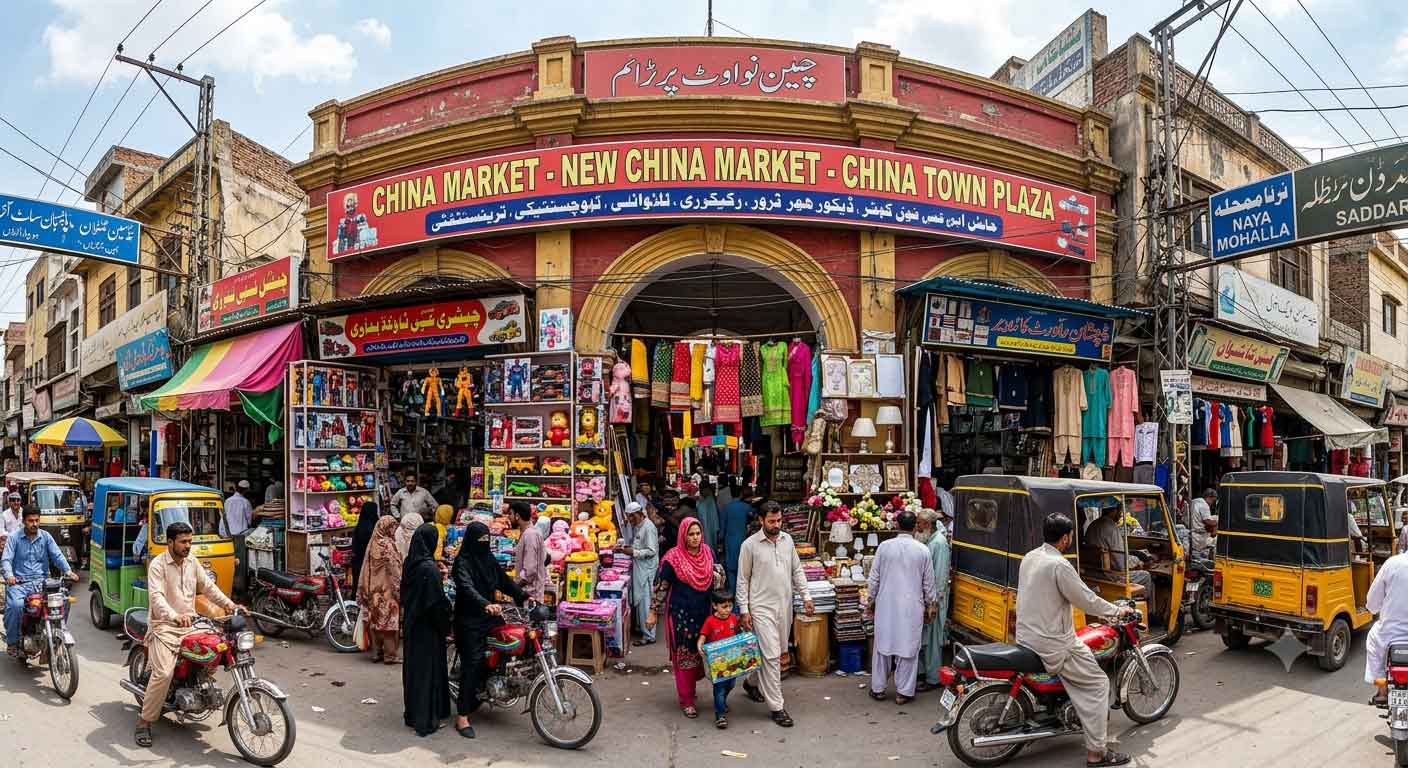
China Market — also known as New China Market or China Town Plaza — is one of the most popular wholesale and retail shopping destinations in the twin cities of Rawalpindi and Islamabad. It sits in the Saddar area, right off College Road near Naya Mohalla, and draws shoppers looking for affordable toys, home decor, crockery, clothing, and stationery, often at wholesale rates even for single-item retail purchases.
The market grew out of a cluster of shops importing goods from China, which is how it earned its name. Today it’s less a single building and more a dense shopping strip — narrow lanes lined with shops on both sides, stretching roughly half a kilometer along College Road. Locals sometimes use “China Market” loosely to refer to the whole cluster of shops in this stretch, including a few standalone plazas that have grown up around the original market.
Unlike a mall, there’s no single entrance or directory — the experience is closer to a traditional bazaar, where each shop specializes in a narrow category, and shopkeepers know their neighbors well enough to point you to whoever sells what you’re actually looking for.
A Short History of the Market
China Market developed gradually as Rawalpindi’s College Road became a hub for shops importing goods from China — decorative items, toys, and household products that were hard to find elsewhere at accessible prices. Over the years, as demand grew, more shops opened in the surrounding plazas, and the area became known simply as “China Market” rather than by any single shop’s name.
It’s now firmly part of Rawalpindi’s shopping identity, alongside older markets like Raja Bazar and Moti Bazar, but with a distinct focus: while Raja Bazar leans toward jewelry, cloth, and general goods, China Market has built its reputation specifically around home decor, toys, crockery, and affordable fashion — much of it imported.
Location & How to Find It
China Market is located on College Road, Naya Mohalla, Saddar, Rawalpindi, next to Urdu Bazar. It’s easy to reach from almost anywhere in Rawalpindi or Islamabad:
- By metro bus: The market sits along the metro bus route, with Saddar metro station a short walk away — one of the most convenient ways to reach it if you’re coming from Islamabad.
- By ride-hailing app: Careem, InDrive, and Yango all serve the area reliably, and drop-off right at the market entrance is usually possible outside peak traffic hours.
- By car: There’s parking nearby, though the surrounding streets get congested during peak hours — parking on a side street off College Road is usually easier than trying to park directly outside the market.
- By local transport: Wagons and rickshaws running along College Road and through Saddar also stop within walking distance.
If you’re coming from Islamabad, allow extra time during rush hour (roughly 5–7 PM), since College Road and the surrounding Saddar streets get heavily congested in the evening — exactly when the market is busiest.
China Market Rawalpindi Timings
China Market is open daily, which makes it convenient regardless of your schedule. Based on standard hours for the market:
| Day | Typical Hours |
| Saturday – Thursday | 10:00 AM – 9:00 PM |
| Friday | Afternoon opening (around 3:00–3:30 PM) due to Jummah prayers, until 9:00 PM |
Individual shops may open or close slightly earlier or later depending on the vendor, and hours can shift around Eid, Ramadan, and other public holidays — some shops extend hours during the Eid shopping rush, while others may close early on the day itself. If you’re heading out for something specific, it’s worth calling ahead or checking a shop’s Google Maps listing for same-day updates.
Best times to visit, by goal:
- To avoid crowds: Weekday mornings, 10 AM–1 PM.
- To get the best bargaining position: Early in the day, when shopkeepers are more willing to close a deal to get their first sales in.
- To browse the full range without rushing: Weekday early afternoons, before the after-work crowd arrives around 5 PM.
- To avoid altogether if possible: Weekend evenings and the days immediately before Eid, when the market is at its busiest and prices are least negotiable.
What to Buy at China Market
China Market is organized loosely by product type, with shops for each category clustered together. Here’s what each section is known for, along with rough price expectations — treat these as general starting ranges rather than fixed prices, since bargaining and seasonal demand both shift them.
Toys
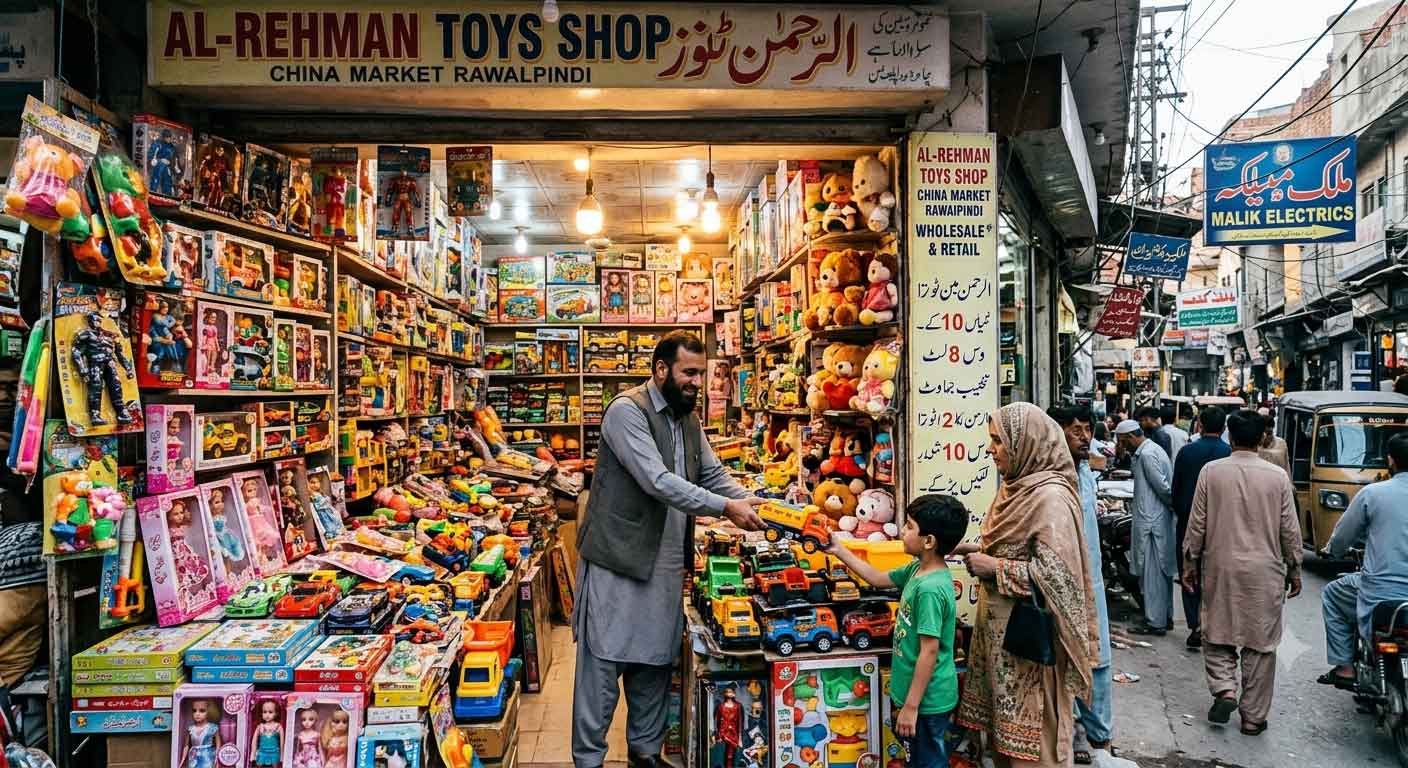
A major draw for parents and resellers alike — a wide range of imported and locally-packaged toys, from basic plastic toys to battery-operated and remote-control items. Retail prices for small toys often start under PKR 200, while larger or electronic toys can run into the low thousands. Resellers buying in bulk typically get meaningfully better per-unit pricing, which is part of why the market draws small shopkeepers from across the city.
Crockery & Home Décor
Dinner sets, cutlery, glassware, artificial plants, lamps, photo frames, paintings, and decorative candles — a go-to spot for home decor shopping and wedding or event decoration pieces. Basic crockery sets are generally affordable, while detailed or larger dinner sets cost more; the range in quality is wide, so it’s worth comparing a few shops before committing to a larger purchase.
Clothes & Bridal Wear
Everyday clothing for men, women, and children, plus a notable selection of bridal and groom’s wear, with some shops offering custom tailoring and alterations. Ready-made basics are priced well below mall retail, while bridal wear pricing depends heavily on fabric and customization — it’s worth asking multiple shops for quotes on the same design before deciding.
Stationery
School bags, stationery items, and school supplies — especially busy in the weeks before the school year starts, when prices can rise slightly with demand. Buying stationery in bulk (for a school, office, or resale) tends to get noticeably better pricing than single-item purchases.
Shoes & Accessories
A large selection across styles, sizes, and price points, from casual sneakers to traditional footwear, along with belts, bags, and small fashion accessories.
Furniture & Electronics
Smaller in scale than the other sections, but worth a look if you’re furnishing on a budget — expect simpler, mass-produced pieces rather than custom furniture, and always inspect items in person before buying.
China Market vs. Other Rawalpindi Markets
If you’re deciding where to shop, here’s roughly how China Market compares to Rawalpindi’s other well-known markets:
- China Market vs. Raja Bazar: Raja Bazar is broader and older, known especially for jewelry and cloth, while China Market is more focused on home decor, toys, and affordable fashion. If you’re shopping for gold or fabric specifically, Raja Bazar is usually the better first stop.
- China Market vs. Moti Bazar: Moti Bazar leans toward specialty items and has a more traditional bazaar feel; China Market tends to be more organized by category and slightly easier to navigate for first-time visitors.
- China Market vs. malls: Prices at China Market are consistently lower than mall retail for comparable items, though the shopping experience is less climate-controlled and more hands-on — expect to negotiate rather than see fixed price tags everywhere.
Parking Near China Market
Parking is available near the market, but the area gets busy, especially in the afternoon and evening. If the main street is full, side streets just off College Road usually have more space. Arriving in the morning on a weekday gives you the best chance of parking close by. If you’re visiting during a peak period like the pre-Eid rush, consider using a ride-hailing app instead of driving, since finding parking during those weeks can take longer than the shopping trip itself.
What to Eat Nearby
Shopping trips to China Market often turn into half-day outings, and the surrounding Saddar area has no shortage of food options — from street food stalls to small sit-down restaurants serving Rawalpindi favorites. If you’re planning a longer visit, it’s worth pairing your shopping trip with a stop at one of the well-known local eateries in the area — something we cover in more detail in our Rawalpindi food guides.
Shopping by Season: When to Plan Your Visit
- Before Eid (both Eid-ul-Fitr and Eid-ul-Adha): The busiest period of the year, especially for clothing, bridal wear, and decor. Prices can firm up as demand rises, so shopping a few weeks ahead of the holiday, rather than in the final days, usually gets you better deals and less crowding.
- Back-to-school season: Stationery and school bag prices see a seasonal bump. If you can shop a few weeks before term starts, you’ll typically find better stock and more room to negotiate.
- Wedding season (winter months): Bridal wear, decor, and crockery shops see heavier traffic. Booking custom tailoring work early avoids the rush closer to wedding dates.
- Off-peak months: Late monsoon and early autumn tend to be quieter, making it a good time for larger furniture or decor purchases where you want unhurried browsing and stronger negotiating leverage.
Tips for First-Time Visitors
- Go on a weekday morning. Crowds build up through the afternoon, peaking around 3 PM onward — mornings are calmer and vendors are more open to negotiating.
- Bring cash. Most shops here are cash-only; card machines are rare, and relying on one can leave you stuck mid-purchase.
- Bargain, respectfully. Negotiating 20–30% off the initial asking price is normal for non-fixed-price items. Shops with visibly posted prices usually mean fixed pricing, so save your negotiating energy for shops without clear tags.
- Inspect before you buy, especially imported electronics and crockery — check for damage, missing parts, or manufacturing defects before leaving the shop, since returns aren’t always straightforward in an open-air market setting.
- Wear comfortable shoes. The lanes are narrow and can get crowded, so comfortable footwear makes a real difference over a few hours of walking.
- Keep valuables secure. Like any busy market, be mindful of your phone and wallet in tighter, crowded lanes, especially during peak hours.
- Shop with a list. It’s easy to get pulled into impulse buys — knowing what you actually need helps you stick to a budget and avoid decision fatigue halfway through.
- Compare before you commit. If you’re making a larger purchase — a full dinner set, bridal outfit, or bulk stationery order — check two or three shops first. Prices for similar-looking items can vary more than you’d expect.
- Bring a bag or two. Between multiple shops and no shared checkout, you’ll likely end up carrying several separate bags — a spare tote can make the walk back to your car or ride noticeably easier.
- Time it around your goal, not just convenience. If bargaining well matters more to you than avoiding crowds, an early weekday visit works better than an evening one, even if evenings fit your schedule more easily.
- Ask about delivery for bulk purchases. If you’re buying furniture or a large decor order, some shops can arrange local delivery — it’s worth asking rather than assuming you’ll need to carry everything yourself.
A Practical First-Visit Walkthrough
If you’ve never been before, here’s a simple way to structure your first trip:
- Arrive mid-morning on a weekday to get the calmest browsing experience.
- Do a walk-through first without buying anything — get a sense of which shops carry what before committing to a purchase.
- Start with your must-buy items, since you’ll have the most patience and best prices early in the visit.
- Leave browsing and impulse items for later, once your priority purchases are done.
- Grab food nearby if you’re planning a longer visit, rather than shopping on an empty stomach through peak hours.
- Keep your bags organized as you go — a designated bag for fragile items (like crockery) makes the trip home much easier.
Is China Market Worth the Trip?
For anyone shopping on a budget — whether furnishing a home, buying toys for kids, stocking a small shop, or picking up decor for an event — China Market consistently comes up as one of the better value destinations in the twin cities. The tradeoff is convenience: you won’t get mall-style fixed pricing, air conditioning, or a single checkout counter, but for most categories sold here, the savings and variety make the extra effort worthwhile.
Frequently Asked Questions
Is China Market Rawalpindi open today?
China Market is open every day of the week, including Sundays. On Fridays, most shops open later in the afternoon (around 3:00–3:30 PM) because of Jummah prayers. Public holidays and Eid may affect specific shop hours, so it’s worth checking ahead if you’re visiting on a holiday.
What are the timings of China Market Rawalpindi?
Standard hours run from about 10:00 AM to 9:00 PM, Saturday through Thursday. Friday hours typically start later in the afternoon and run until around 9:00 PM.
Where exactly is China Market located?
It’s on College Road, Naya Mohalla, in the Saddar area of Rawalpindi, right beside Urdu Bazar.
Is China Market good for wholesale buying?
Yes — many shops sell at wholesale rates even for smaller quantities, especially for toys, crockery, and stationery, making it popular with small shopkeepers and resellers as well as regular shoppers.
How do I get to China Market without a car?
The market is accessible via the metro bus route, with Saddar metro station nearby, and ride-hailing apps like Careem, InDrive, and Yango operate reliably in the area.
Can you bargain at China Market Rawalpindi?
Yes, bargaining is common and expected for most items, particularly in the clothing, toy, and decor sections. Shops with clearly marked price tags generally have fixed prices.
Is China Market cheaper than Raja Bazar or the malls?
Generally, yes for the categories it specializes in — toys, home decor, crockery, and affordable clothing tend to be priced below both mall retail and comparable items at Raja Bazar, though Raja Bazar remains the stronger option specifically for jewelry and fabric.
How much time should I plan for a visit?
Most shoppers spend anywhere from 30 minutes to a couple of hours, depending on how many categories they’re browsing. If you’re making several purchases and comparing prices across shops, plan for at least an hour.
Is China Market safe to visit?
It’s a busy, well-established commercial area with regular foot traffic, but as with any crowded market, it’s sensible to keep an eye on your belongings, particularly during peak hours.
Do shops at China Market accept card payments?
Most vendors are cash-only. It’s a good idea to carry enough cash for your planned purchases, since card machines are the exception rather than the norm.
What’s the best time of year to visit for the best prices?
Off-peak months, away from Eid and wedding season, generally offer calmer shopping and more room to negotiate. If you must shop during Eid or wedding season, going a few weeks ahead of the peak rush helps.
Can I get items delivered from China Market?
For larger purchases like furniture or bulk decor orders, some shops can arrange local delivery — ask directly, since this isn’t offered uniformly across the market.
This guide is based on our own research and visits to China Market Rawalpindi. Timings and prices can change, especially around holidays — if you notice anything outdated, let us know via our Contact page and we’ll update it.
Last verified: July 2026